
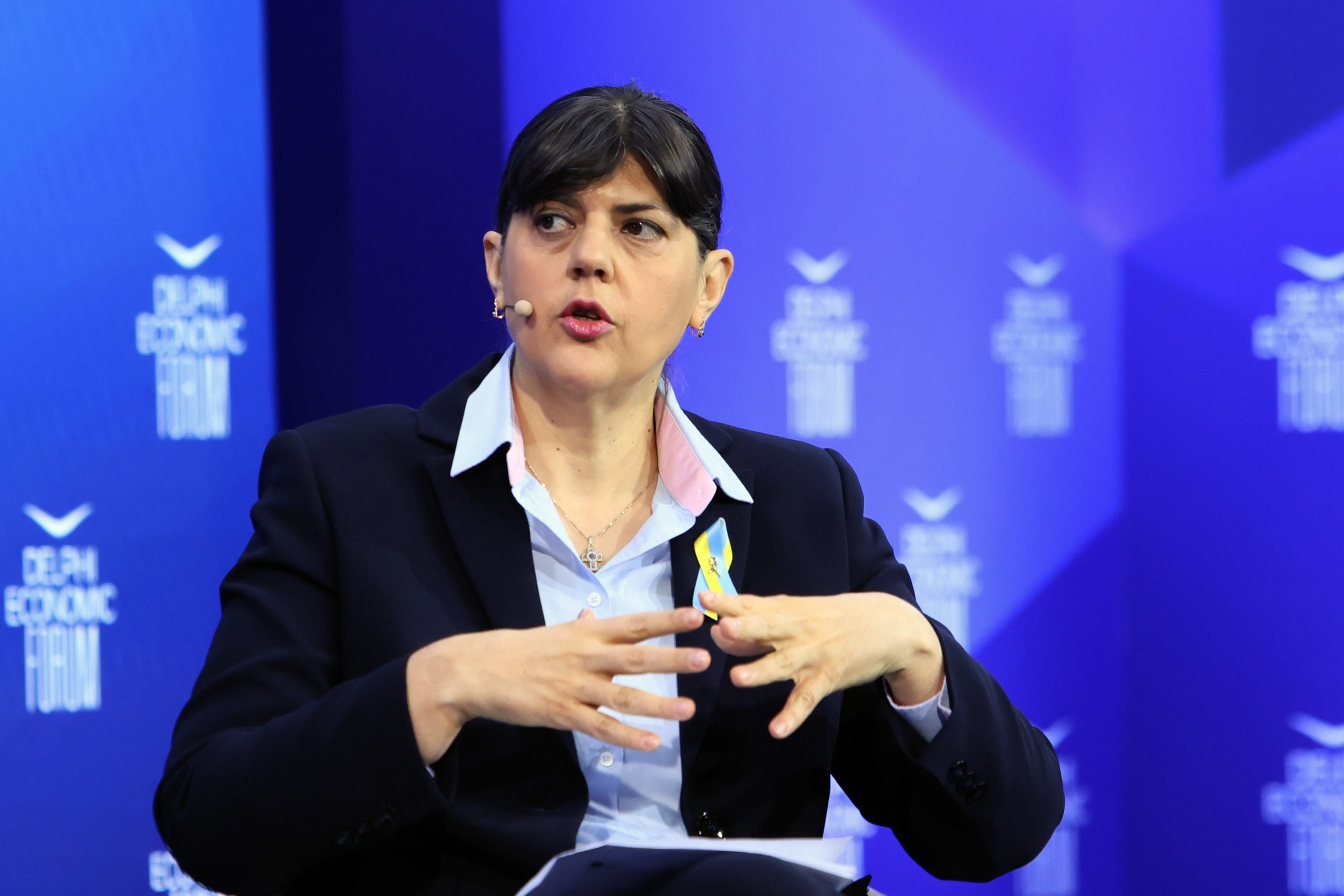
Την αντίδραση της Γενικής Ευρωπαίας Εισαγγελέως, Λάουρας Κοβέσι, προκάλεσε η πρόσφατη νομοθετική πρωτοβουλία της Κυβέρνησης για την επιτάχυνση των υποθέσεων που αφορούν πολιτικά πρόσωπα αλλά και η απόφαση του Ανωτάτου Δικαστικού Συμβουλίου για παράταση της θητείας των Ελλήνων εντεταλμένων εισαγγελέων για δύο αντί για πέντε έτη.
H Λάουρα Κοβέσι έστειλε νέα επιστολή μετά την επιστολή στον Φλωρίδη, στην Ευρωπαϊκή Επιτροπή εκφράζοντας σοβαρές αμφιβολίες ως προς τη συμμόρφωση των ελληνικών αρχών με την υποχρέωση ειλικρινούς συνεργασίας με την Ευρωπαϊκή Εισαγγελία.
«Η βεβιασμένη τροποποίηση του ελληνικού Κώδικα Ποινικής Δικονομίας, με την οποία θεσπίζεται ειδική διαδικασία για κακουργήματα που διαπράττονται από βουλευτές, έχει αρνητικές επιπτώσεις στην ικανότητα της EPPO να διερευνά και να ασκεί δίωξη αποτελεσματικά για αδικήματα που εμπίπτουν στην αρμοδιότητά της στην Ελλάδα», αναφέρει η ανακοίνωση της Ευρωπαϊκής Εισαγγελίας.
Η επιστολή Κοβέσι στην Κομισιόν στα Αγγλικά
«Statement regarding recent developments affecting the effective and independent functioning of the EPPO in Greece
Today, the European Chief Prosecutor addressed a letter to the European Commission in line with Recital 16 of Regulation (EU) 2020/2092 of 16 December 2020 on a general regime of conditionality for the protection of the budget of the European Union (Conditionality Regulation), pointing at recent legislative amendments and decisions with adverse effect on the independent and effective functioning of the European Public Prosecutor’s Office (EPPO) in Greece.
The hasty amendment to the Greek Code of Criminal Procedure, establishing a special procedure for felonies committed by Members of Parliament, has a negative effect on the EPPO’s ability to effectively investigate and prosecute offences under its competence in Greece. Moreover, the Hellenic Supreme Judicial Council’s recent refusal to recognize the full effect of the decision taken by the College of the EPPO on 12 November 2025, to renew the mandate of three European Delegated Prosecutors for 5 years, has a negative effect on the EPPO’s independence in Greece.
The European Chief Prosecutor therefore informed the European Commission about these developments, which cast serious doubts as to the Greek authorities’ compliance with their obligation of sincere cooperation under Article 4(3) TEU.
The EPPO is the independent public prosecution office of the European Union. It is responsible for investigating, prosecuting, and bringing to judgment crimes against the financial interests of the EU.